4.9
Why Might a Basement Need More Than One Sump Pump Location?
TLDR
One sump pit can serve several parts of a basement when the drains can carry water from each area to the same spot. A second pit may make sense in a large or divided basement where connecting the drains is difficult, or where there’s a significant amount of water to manage. If water shows up across the basement while your pump is running, start by checking whether that part of the basement drains to the existing pit.
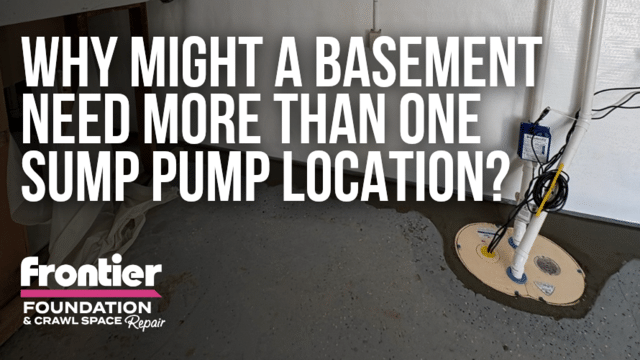 Your sump pump can be running during a heavy rain while water pools along a wall on the other side of the basement. If you’ve seen that happen, you might wonder whether the pump is too small or whether you need another one across the room.
Start with the path the water takes. The drain collects water and carries it to the sump pit. Once the water reaches a certain level in the pit, the pump sends it outside through a discharge line. Where the drains can run helps determine how many places the basement needs to collect water.
Start With the Drainage Layout
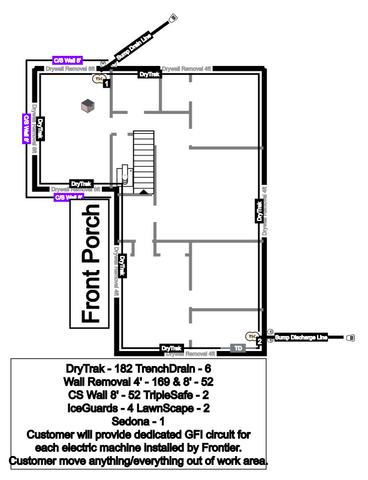
“If we have a lot of straight runs, then we can get away with one sump pump,” said Hunter F., Design Specialist for Frontier Foundation and Crawl Space Repair.
Hunter looks at how many feet of drainage the basement needs and how the space is laid out. He also walks around the house to see where the discharge line could release water so it flows away from the foundation.
The type of drain can vary from one part of the basement to another. On a Nashville project, our crew installed WaterGuard below the floor in some areas, DryTrak along the base of the wall in others, and a TrenchDrain at the doors. Those drains served one TripleSafe sump pump system. See the Nashville basement waterproofing project.
Look at What a Second Pit Would Serve
“Rarely am I going to recommend two different sump pumps,” Hunter said. He considers two locations when a basement is especially large, takes on a significant amount of water, or is, as he puts it, “very cut up.”
In a basement divided into several sections, it may be difficult to run every drain back to a single pit. A second pit gives some of those drains a closer place to send the water they collect. If your proposal shows two pits, ask your design specialist to point out which sections of drainage feed each one and where each discharge line leads.
In Brentwood, TN, a homeowner saw water entering through the foundation wall after heavy rains. The existing drainage system wasn’t collecting it properly. Our crew removed sections of drywall to install WaterGuard sub-floor drainage connected to two TripleSafe systems. The discharge lines carry the collected water outside through IceGuard fittings and LawnScape outlets. See the Brentwood basement waterproofing project.
Check Where the Existing Drain Stops
“A sump pump is only getting the water out in that one location,” Hunter said. If the drain stops short of the wet area, the pump can empty its pit every time it fills while water continues to pool along the opposite wall.
In some basements, extending the drain gives water from that area a path to the existing pit. If the layout makes that connection impractical, a second pit may be a better fit. If you’ve taken photos after a rain, show your design specialist where the water first appeared. That spot can help them trace where the water is coming in and see whether the existing drain serves that area.
Read the Pump Count Alongside the Job Drawing
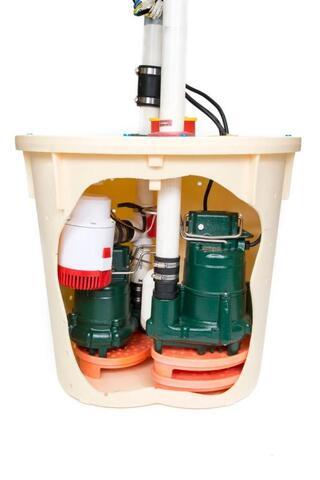
A single sump pit can house several pumps. Frontier’s TripleSafe system has a primary pump for everyday use and a secondary pump that can step in if the primary fails or more pumping capacity is needed. A third, battery-powered pump can operate during a power outage. All three serve the same basin. Explore Frontier’s sump pump systems.
When you review your proposal, look for how many basins the crew plans to install. Your design specialist can use the job drawing to walk you through the route from the wall where you’ve seen water to the spot outside where it will discharge.
Frequently Asked Questions
Can a second sump pit be added to a basement that’s already waterproofed?
Yes, in some basements. Your design specialist will look at where the existing drain runs, where a new pit could go, and how water from that pit would get outside. In a finished basement, ask which sections of flooring or drywall the crew would need to open.
Will both sump pumps run at the same time?
Each pump responds to the water level in its own basin. One may run more often if the drains feeding it collect more water. Both can run at the same time if the water in each pit reaches the level that activates its pump.
If I have two sump pits, does one battery backup cover both?
A battery backup pump serves the basin where it’s installed. If your proposal includes two pits, check which ones include a battery backup so you know which areas can keep draining during a power outage.