4.9
What Happens During a Basement Waterproofing Inspection?
TLDR
A Frontier basement waterproofing inspection includes a walkthrough with your design specialist and a discussion of the recommended repairs. Your observations help explain the history of the problem, even if the basement is dry during the appointment. You’ll have an opportunity to ask questions before deciding how to move forward.
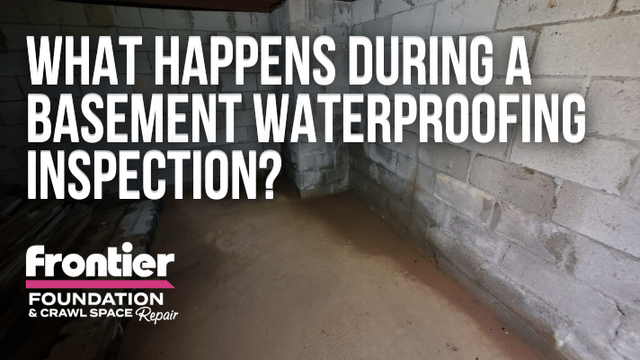
If your basement leaks, you probably have a few questions before scheduling an inspection. Will the specialist be able to find the problem if it hasn’t rained? What will they need to see? What happens after they look around?
At Frontier, the appointment starts with a conversation about your home. The walkthrough that follows helps connect what you’ve experienced to the evidence in the basement.
The Inspection Starts With Your Experience
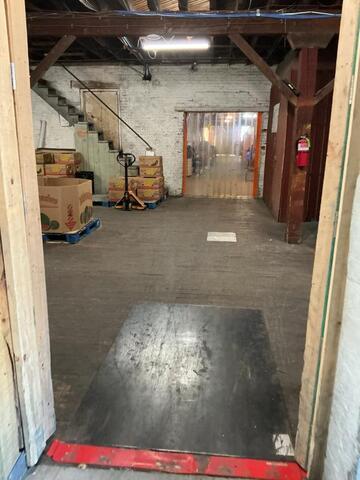
Before heading into the basement, your design specialist asks what led you to call. You may have dealt with water for years, or a recent storm may have revealed a problem for the first time.
As Frontier Design Specialist Brock Cumings explains, “It's getting to know the customer and figuring out their why.”
That means understanding what the leak is preventing you from doing. Perhaps you’ve stopped storing belongings near one wall. Maybe you want to finish the basement but need to address water intrusion first.
Your specialist will also ask about the leak itself. Where does the water first appear? Does it happen every time it rains, or only when the ground stays wet for several days? Those details help guide the inspection.
You Can Walk Through the Basement With Us
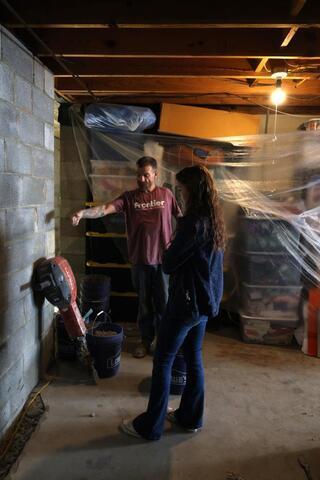
A basement gives you the opportunity to follow along and discuss findings as your specialist examines the space.
“Now with the basement, the customer actually has the ability to go through the entire inspection process with me, which is a little bit different than the typical crawl space would be,” Brock says.
You can point directly to the spot where water comes in. Your specialist can look at that area with you and explain what they see, making it easier to understand how the proposed work relates to the problem.
This is a conversation throughout the appointment. If something doesn’t make sense, ask about it while you’re standing in front of it.
A Dry Basement Can Still Show Evidence of a Leak
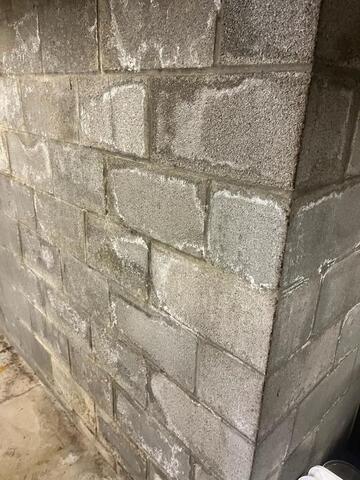
You don’t need to schedule the inspection during a storm. Brock often arrives at homes where the basement is dry, despite a history of water intrusion.
In those situations, your description becomes especially useful. Photos taken during a previous leak can help show how the water moves through the space.
There may also be evidence left on the walls. Efflorescence, for example, is the white mineral residue that can remain after moisture moves through masonry and evaporates. A wall can feel dry during the appointment while still showing signs of past moisture movement.
Your specialist considers that evidence alongside what you’ve observed. The absence of a puddle that day doesn’t resolve a recurring problem or prevent an inspection.
Understanding Where the Water Enters
Part of the walkthrough is explaining why water appears where it does.
Brock describes how water builds up in the soil against foundation walls. The resulting pressure can push water toward joints and other openings in the foundation.
Many basements have a footing, foundation wall, and floor slab constructed separately. Where those components meet, the joints can allow water to enter. Moisture can also pass through porous concrete block.
If you regularly find water at the base of a wall, that construction helps explain why. Your specialist will connect the findings in your basement to the recommended repair so you understand what the work is intended to accomplish.
Reviewing the Proposed Work
After the inspection, you’ll sit down with your specialist to go over the recommendation.
The proposal should make sense in light of what you’ve just seen. If drainage is recommended along a particular wall, you should understand why it belongs there. If the plan includes a sump pump, your specialist should explain where the collected water will go.
You can also discuss how installation will affect the basement. A finished room may require different preparation than an open storage area, so bring up any concerns about access or the way you currently use the space.
Before the appointment ends, make sure you understand the scope of the proposed work. Ask about equipment maintenance and anything else that will affect your decision. You don’t need a background in waterproofing to evaluate a repair proposal, but you do need a clear explanation.
What Happens at the End of the Appointment?
Your specialist leaves you with a folder containing information discussed during the visit. You can refer to it afterward as you review the proposal.
Brock wants homeowners to feel comfortable asking questions before he leaves. “And by the end, they should have no questions or concerns,” he says.
The purpose of the appointment is to give you a clear understanding of your basement’s condition and the work Frontier recommends. From there, you can decide how to move forward.
To get answers about water in your basement, contact Frontier Foundation & Crawl Space Repair to schedule a free inspection.
Frequently Asked Questions
What should I move before the inspection?
When practical, make the areas where you’ve noticed water accessible. If heavy belongings or finished walls limit access, let Frontier know when scheduling so you can discuss any preparation.
Should I bring information about previous waterproofing work?
Yes. Installation records and service history can help your specialist understand an existing system. Mention any changes you’ve noticed since the work was completed, especially if the location or frequency of leaks has changed.
Can I schedule an inspection before finishing my basement?
Yes. Addressing water concerns before renovation helps protect your investment and allows you to plan the work before finishes cover the foundation walls or floor edges. Tell your specialist what you have planned for the space.
What if I recently bought the home and don’t know its leak history?
Share what you’ve noticed since moving in, along with any relevant information from the seller or home inspection report. You don’t need a complete history to schedule an appointment. The walkthrough gives your specialist an opportunity to examine the conditions that are accessible now.