4.9
4.9 My Basement Only Leaks During Heavy Rain. Does It Still Need Repair?
TLDR
A basement that leaks during heavy rain has a water-entry problem, even when it stays dry between storms. The appropriate response depends on where the water enters, how much accumulates, and whether the foundation shows signs of movement. Correcting gutters, downspouts, and grading reduces runoff near the house. Recurring groundwater intrusion requires a way to collect and remove that water. An inspection establishes which conditions need attention and which solution fits the home.
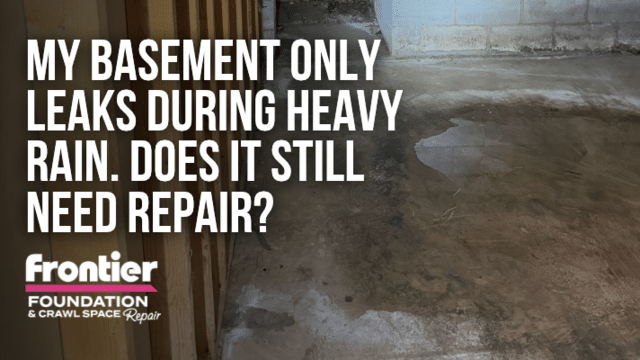

A basement leak that follows a predictable pattern can become part of your routine. A heavy storm arrives, water collects along the same wall, and you clean it up. Once the floor dries, the basement returns to normal.
But drying out does not resolve the entry point. It tells you that the conditions producing the leak have passed.
If your basement only leaks during heavy rain, the problem still needs attention. Whether that means correcting exterior drainage, installing basement waterproofing, or monitoring a limited damp area depends on the evidence. The frequency of the leak is one part of that decision.
Benjamin G., a Design Specialist at Frontier Foundation & Crawl Space Repair, and Nick T., a Basement Foreman, explain what they look for when evaluating and repairing these problems.
Heavy Rain Reveals How Water Moves Around Your Foundation
Basement construction changes the soil surrounding a home. Crews excavate for the foundation, build the footing and walls, and backfill the space around them. Ben explains that this disturbed soil provides a route for water to collect beside basement walls.
During heavy or prolonged rain, water accumulates in the ground around and beneath the basement. That water creates hydrostatic pressure against the foundation. Cracks, construction joints, and other openings provide paths into the home.
Nick emphasizes the pressure beneath the floor as groundwater rises. Water entering at the wall-floor joint or through the slab can reflect conditions below the basement, rather than runoff entering directly through a wall.
This explains why lighter rain does not always produce a leak. A larger storm creates conditions the basement does not encounter during ordinary rainfall. The resulting water intrusion reveals where the home’s existing drainage and foundation allow water to enter.
The Inspection Starts With Evidence of Past Leaks
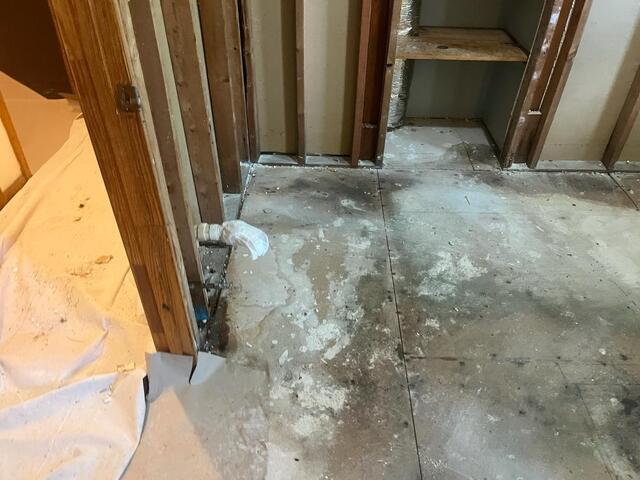
A basement does not need to be actively leaking for a specialist to evaluate it. Water leaves evidence after the floor dries.
Ben looks for staining, discoloration, and efflorescence: the white mineral deposits left as moisture moves through masonry and evaporates.
“During really dry periods, we’ll be able to tell that there was water behind those walls during the wet part of the year,” Ben explains.
Efflorescence establishes that moisture has passed through the material. Its location, along with staining and the homeowner’s account, helps the specialist evaluate the affected area. Cracks and inward wall movement provide additional evidence about the foundation’s condition.
Your observations are part of that assessment. Where water appears first, how it spreads, and whether the pattern has changed help connect the inspection findings with the leak you experience.
A thorough evaluation establishes both the water-entry problem and whether structural movement also needs attention.
Exterior Drainage Is Part of the Diagnosis
Waterproofing recommendations should account for the rainwater being directed toward the home.
Clogged gutters concentrate roof runoff along the foundation. Short downspouts discharge it into the soil beside basement walls. Settled landscaping and ground that slopes toward the house hold water where it can contribute to intrusion.
Frontier’s guidance is to keep gutters clear, extend downspouts about 10 feet from the home, and maintain a slope that carries surface water away. The discharge point must also allow water to continue away from the foundation rather than flow back toward it. These principles are covered in How Your Gutters and Foundation Are Connected.
Correcting these conditions reduces the amount of runoff collecting beside the house. The inspection then establishes whether surface-water management addresses the leak or whether groundwater also needs to be collected beneath or inside the basement.
That distinction determines the scope of the work. A downspout extension addresses roof runoff. A basement drainage system addresses water reaching the foundation’s entry points. Each recommendation should be tied to a condition found at the home.
Damage Depends On What the Water Reaches
The impact of an occasional leak extends beyond the visible puddle.
Ben identifies moisture damage to stored belongings, mold, and mildew as concerns in basements used for storage. Water reaching cardboard boxes, furniture, or finished materials creates a different level of exposure from water on an otherwise empty concrete floor.
The floor drying does not establish that everything the water contacted has dried. Repeated wetting can affect the same materials each time a storm brings water inside.
Foundation walls require a separate assessment. Pressure from water and saturated soil can contribute to cracking and inward movement. Those findings call for structural evaluation, regardless of how often the basement leaks.
A water-entry problem does not automatically mean the foundation is failing. The inspection must identify what has been affected so the repair addresses the actual damage and its cause.
Pooling Water Calls for Action
Ben draws a clear distinction between a limited damp area and water accumulating on the floor.
Minor dampness without cracks, inward wall movement, or other structural concerns can be appropriate to monitor. Monitoring should have defined limits: an expanding damp area, new pooling, or changes in the wall are reasons to reassess the condition.
For more significant findings, Ben’s recommendation is direct:
“If you’re actually seeing pooling water or foundation cracks, then you want to fix that as soon as possible.”
Cracks need to be evaluated to determine their cause and significance. Recurring pooling or flooding warrants repair planning, even when it takes a substantial storm to produce it. Waiting for the problem to happen more often leaves the existing water-entry problem unresolved.
A dehumidifier serves a different purpose. It controls moisture in the air and helps manage humidity. It does not collect groundwater entering through the foundation or remove standing water from the floor.
The recommendation should reflect the condition observed: humidity control for damp air, drainage for incoming water, and structural repair where movement is present.
The Foundation Determines How Drainage Is Installed
Once the inspection establishes that basement drainage is needed, the foundation’s construction determines the installation approach.
“The first thing you have to figure out is what kind of foundation it is,” Ben explains.
Many basements have a footing, wall, and floor slab constructed as separate components. In suitable conditions, Frontier installs WaterGuard beneath the perimeter of the floor slab to collect water and direct it to a sump pump.
A monolithic foundation has the footing and slab formed together. That construction calls for a different approach, such as an above-floor drainage system like DryTrak, to account for the foundation’s configuration.
These construction details matter. The system must collect water effectively while respecting how the foundation was built.
Nick describes the purpose of drainage when groundwater rises beneath the home: “Now it has somewhere to go and escape into and allow the water to be pumped out.”
The drainage system collects the water and carries it to a sump basin. The pump then discharges it away from the home.
A repair proposal should identify the areas being addressed, explain the selected drainage approach, and account for any structural concerns found during the inspection.
Document the Leak You Are Seeing
Photos preserve conditions that may have changed by the time the specialist visits.
Ben recommends:
- A wide photo showing the affected wall and surrounding floor.
- Close-up photos of staining, discoloration, or cracks.
- A photo showing the extent of the water when the leak is at its worst.
Explain where water appeared first and whether it entered during the storm or afterward. If the location or amount has changed, include that history.
You do not need to wait for the next leak to schedule an inspection. Existing evidence and your observations provide a useful starting point.
Get a Recommendation Based on Your Home
A basement that leaks during heavy rain has demonstrated that water can enter under those conditions. The next step is to establish the source and address it with a solution that fits the foundation.
At Frontier Foundation & Crawl Space Repair, our Design Specialist evaluates the basement, considers exterior drainage, and explains the findings behind the recommendation. You should understand where the water is coming from, what the proposed work addresses, and why that approach fits your home.
Schedule a free basement inspection with Frontier today.
Frequently Asked Questions
Does leaking during heavy rain mean my foundation is damaged?
A leak establishes water intrusion, but it does not establish structural failure. Cracks, inward wall movement, and other inspection findings determine whether foundation repair is also needed.
Can Frontier inspect the basement when it is dry?
Yes. Staining, mineral deposits, and other evidence remain after many leaks. Photos and your account of the water’s location help provide context.
Can downspout extensions stop basement leaking?
Downspout extensions reduce roof runoff collecting beside the foundation. Whether that resolves the leak depends on its source. Groundwater entering beneath the floor requires a solution that addresses those conditions.
Will a dehumidifier solve the problem?
A dehumidifier controls airborne moisture. It does not stop groundwater intrusion or remove pooling water. Basement drainage and humidity control perform different functions.