4.9
4.9 What Does a Foundation Service Visit Include?
TLDR
During a foundation service visit, a Frontier technician inspects the installed repair and compares current measurements with the benchmarks recorded after installation. The specific work depends on the system and may include re-tightening GeoLock wall anchors, evaluating SmartJacks and supplemental beams, checking EverBrace wall stabilization or measuring elevations around a pier-supported foundation. The technician also looks for cracks, moisture evidence, and drainage conditions that could affect the home. Frontier Care Club members receive system inspections every nine months, along with annual radon testing, priority scheduling, and member savings.
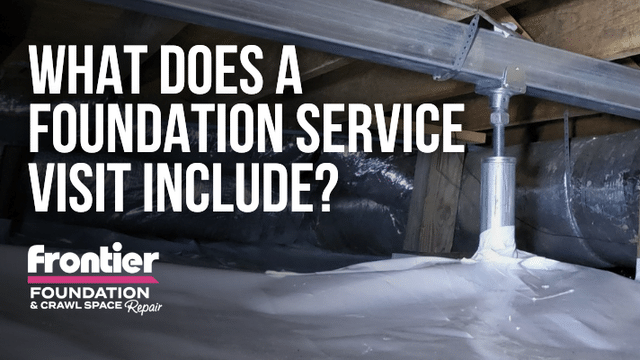
Foundation repair is designed to stabilize a home, but the work does not always end on installation day. A service visit allows the team to inspect the repair, compare the home’s current condition with its documented baseline, and determine whether anything has changed.
The exact process depends on the system installed. A GeoLock wall anchor serves a different purpose than a SmartJack, pier system, or EverBrace wall restoration system. The service technician isn't just looking at the product, either. They are looking at the repaired area as part of the home’s larger structure.
Here is what homeowners can expect when Frontier returns to service a foundation repair.
The Visit Starts With the Homeowner
The technician will first ask whether you have noticed any changes since the repair. New cracks, sticking doors or windows, uneven floors, and water entering through a foundation wall can all provide useful context.
That conversation helps guide the visit, but the service team does not rely on memory alone. The technician reviews the installed repair, documents its current condition, and compares new measurements with the information recorded after installation. Frontier’s maintenance checklist then guides the system-specific work, such as checking torque on wall anchors, evaluating SmartJacks, or measuring the elevation of a pier-supported foundation.
Benchmarking Gives the Team a Point of Comparison
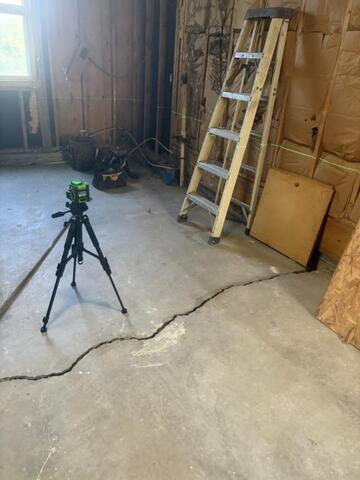
When Frontier completes a foundation repair, the team records benchmarks that can be referenced later. These measurements matter because a crack may look different depending on lighting, paint, or a homeowner’s viewing angle. A benchmark gives the technician something objective to compare.
“Once all the work is done, we’re going to benchmark everything that we do when it comes to foundation repair,” said Frontier Vice President Dustin Gebers. “That way, if for some reason a homeowner has an issue or thinks that the house may continuously be moving or shifting, we have a way to put a laser up and know: Is something moving, or is something else going on?”
During a service visit, the technician sets up a laser level and measures against the original benchmark locations. Zack W., a Frontier service technician, explained:
“We will put a laser level up on the benchmarking pins. We’ll either try to line it up across the benchmarking pins, or we will put it some distance lower or above and take a tape measure and measure from the laser to the benchmarking pins.”
The technician then compares the new readings with the measurements already on file. If they are consistent, the repair is continuing to hold at its documented position. If they differ, the team has evidence to investigate further.
What the Technician Checks on Each Foundation System
Although documentation and measurements are part of every visit, the physical inspection varies by repair type.
GeoLock Wall Anchors
GeoLock wall anchors are installed to stabilize a foundation wall that is bowing or moving inward. During service, the technician evaluates the wall anchor plates and checks the system at each installed location. The anchors are re-tightened to the appropriate torque, and any excess anchor rod can be removed.
The technician also benchmarks the position of the wall at each location. These measurements help show whether the wall has remained stable or changed since the previous visit. Because exterior soil and water can continue to place pressure on a foundation wall, the visit also includes an inspection of the foundation and the grading around the home.
SmartJacks
SmartJacks support floor framing above a crawl space or basement. To service them, the technician enters the accessible area and evaluates the SmartJacks and any supplemental beams installed with them. The technician checks the supported structure for gaps, movement, or other changes that could affect the repair.
The visit also looks beyond the support system. If the crawl space has been encapsulated, the technician checks the CleanSpace liner for rips, confirms that the seams remain intact, and measures the relative humidity. The foundation, gutters, and grading are inspected because water and moisture conditions can affect the wooden floor system surrounding the repair.
Laser measurements help show whether the supported floor system has changed. If adjustment is needed and the structure can safely accommodate it, the technician can determine how to proceed. Stabilization remains the first goal; returning a floor fully to its original position is not always possible.
As Zack explained, “Foundation settlement is generally something that can always be at least stabilized. Now, getting it picked back up into place, that’s not always possible. There are a lot of conditions that can affect that and keep you from getting the lift that you need.”
EverBrace Wall Restoration
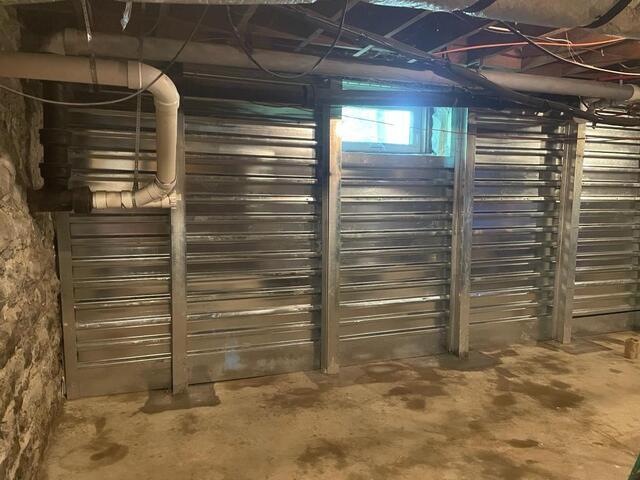
EverBrace is used to stabilize and restore severely damaged foundation walls. Because it functions as a wall-restoration system rather than an adjustable pier or jack, its service process centers on inspection and documentation. The technician checks the repaired wall and accessible system components and benchmarks the wall’s position. The surrounding foundation and exterior grading are also inspected for conditions that could continue placing pressure on the wall.
Any concern is considered in relation to the wall’s original condition and the records from installation. If the inspection identifies a change, the team documents it and determines the right response rather than assuming the wall needs a routine adjustment.
Foundation Piers
Push piers and helical piers transfer the weight of a settling portion of the home to stronger supporting soils. When servicing a pier repair, the technician assesses the existing benchmarks and replaces or adds benchmark points when necessary. The technician determines elevations across the entire foundation rather than checking only the most visibly affected area. This provides context for the repaired section and helps identify movement elsewhere in the home.
The service also includes an inspection of the grading and downspouts and a review of the foundation walls for cracking, efflorescence or water stains. If the measurements show a meaningful change, the team determines whether the pier system needs to be repressurized or whether another condition is contributing to the symptoms.
“If there are inconsistencies with the measurements that were benchmarked previously, we know that something has changed,” Zack said. “We can take the necessary route to resolve the problem if we have to come back and repressurize or something like that.”
What Happens if the Technician Finds a New Concern?
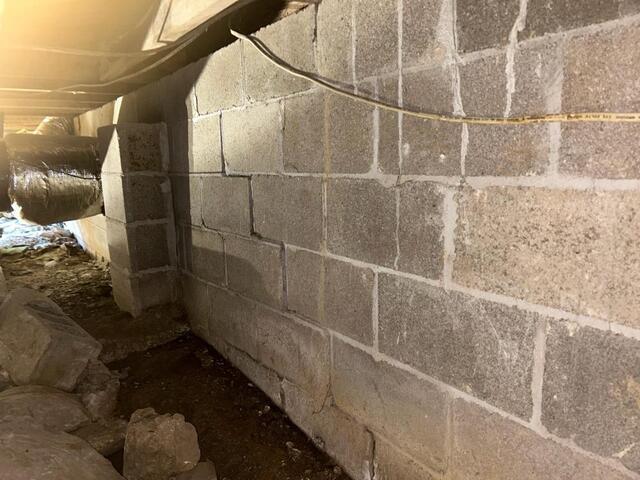
Finding a crack does not automatically mean the original repair has failed. The technician first documents the concern, looks for related cracking, and takes measurements to identify whether movement has occurred.
“I’ll take pictures of it first,” Zack said. “Then I’ll take a look around [and] see if there are more cracks anywhere else, sister cracks to the initial crack that I found. After that, I will go get my laser level and start taking measurements.”
That process helps separate a cosmetic defect from measurable structural movement. When the findings are uncertain, or the homeowner is not ready to complete additional work, the team may continue documenting the area or use a crack monitor. Installed across a crack, the monitor makes small changes easier to see over time.
If measurements confirm significant movement, cracking has become severe, or water is entering through the wall, the technician will explain what was found and what action is recommended. That may involve servicing the existing system, arranging additional evaluation, or discussing another repair for a separate area of the home.
Why Service Is About More Than Tightening Hardware
A foundation service visit is often described as a system check, but the most valuable part is the comparison. Photographs, benchmarks, and laser readings allow the team to evaluate the home using recorded evidence instead of guesswork.
This is also why homeowners should point out changes even if they seem unrelated. A sticking door above a pier repair, a new gap near a supported floor, or moisture at a repaired wall can help the technician understand what the house is doing as a whole.
“Every house is built differently, and every problem is a little different,” Dustin said. “You’ve got to have all the tools in the bag to make sure that you can fix it, fix it right, and then fix it forever.”
Preparing for Your Foundation Service Appointment
Before the technician arrives, make a short list of changes you have noticed and when you first saw them. If possible, clear access to the repaired wall, crawl space entrance or other service area. You can also gather photographs of any cracks or changes you have been tracking.
During the visit, the technician will inspect the repair, take the measurements appropriate for the system, and explain whether the findings are consistent with the existing benchmarks. If anything needs attention, you should leave the appointment understanding what changed and what happens next.
Make Maintenance Easier With the Frontier Care Club
Foundation repairs are only one part of the home systems Frontier can maintain. The Frontier Care Club was created to make regular service easier and help homeowners catch concerns before they lead to an emergency call.
Care Club members receive an inspection of their existing Frontier systems every nine months. Scheduling the visits nine months apart allows the service team to evaluate those systems during different seasons, when temperature, rainfall, and humidity may be affecting the home differently. Each visit includes a full inspection and a complimentary protection evaluation.
Membership also includes annual radon testing, priority scheduling for maintenance and service appointments, and a 5% discount on future purchases at the member’s address. The program is available for $15 per month with a minimum one-year membership.
If you have noticed new cracks, uneven floors, or other changes near a previous foundation repair, contact Frontier Foundation & Crawl Space Repair to schedule a service appointment. Homeowners who want ongoing maintenance can also join the Frontier Care Club to keep their installed systems on a regular service schedule.
Frequently Asked Questions
What happens during a foundation repair service appointment?
A Frontier service technician inspects the installed system, documents its current condition, and compares new measurements with the benchmarks recorded after installation. The technician may also examine foundation cracks, wall position, floor elevations, grading, and downspouts, depending on the type of repair.
Will the technician adjust my foundation system during every visit?
Not necessarily. The technician first uses measurements and a physical inspection to determine whether anything has changed. During maintenance, GeoLock wall anchors are re-tightened to the appropriate torque, while SmartJacks, piers, and other systems are evaluated based on their condition and benchmark readings. Any additional adjustment depends on what the technician finds and what the structure can safely accommodate.
How does Frontier determine whether a foundation has moved since installation?
Frontier records benchmarks when foundation repairs are completed. During a later service visit, the technician uses a laser level and measuring tools to compare the foundation’s current position with those original readings. This provides objective evidence of whether the repaired area has remained stable or experienced additional movement.
How often will Frontier Care Club members receive maintenance?
Frontier Care Club members receive an inspection of their existing systems every nine months. This schedule allows the service team to evaluate the systems during different seasons and environmental conditions. Membership also includes annual radon testing, priority scheduling, and a 5% discount on future purchases at the member’s address.