4.9
4.9 Foundation Issues and Home Sales: What Buyers and Sellers Need to Know
TLDR
Sellers should investigate visible signs of foundation movement before listing instead of waiting for the buyer's inspection. Buyers should obtain a specialized evaluation when an inspection identifies possible movement. Completed repairs should be supported by contracts, diagrams, warranty information, and the repair company's contact information. If repairs are needed during a transaction, the agreement should clearly define the scope of work, contractor, payment method, and timing.

Foundation concerns can complicate a real estate transaction, but they do not necessarily prevent a home from selling. The more important factors are whether the condition has been properly evaluated, whether any recommended work has been completed, and whether the parties have the documentation needed to make informed decisions.
For sellers, addressing possible foundation movement before listing can provide more control over pricing, repairs, and marketing. For buyers, a thorough evaluation can clarify the condition of the home before the inspection period ends. In both cases, early due diligence can prevent a foundation concern from becoming a last-minute obstacle.
Signs that warrant a closer look before listing
Some signs of foundation movement are easy to identify during a walk around the property. Sellers should look for stair-step cracks in brick or mortar, cracks near exterior corners, and sections of the exterior that no longer appear level or aligned.
Inside the home, diagonal drywall cracks near windows and exterior doors may indicate movement. Doors and windows that have become difficult to open can also suggest that their frames are no longer square. Uneven or sagging floors may point to an issue within the floor system or crawl space rather than the perimeter foundation itself.
No single symptom confirms a structural problem. Cracks and alignment changes can have several causes, and some are cosmetic. However, when these conditions are present, an evaluation can determine whether the home needs repair or simply documentation showing that no structural work is recommended.
Why sellers may benefit from an inspection before listing
If a seller is aware of cracks, uneven floors, or other signs of movement, there is an advantage to having the property evaluated before it reaches the market. The findings can inform decisions about repairs, pricing, disclosures, and listing strategy.
Waiting for the buyer's general home inspection gives the seller less time to gather opinions, compare proposals, or complete work. It may also introduce a new issue after the price and other major terms have already been negotiated.
An inspection before listing allows the seller and listing agent to decide how the condition should be handled. The seller may choose to complete the recommended work and market the home with documentation and warranty coverage. In other cases, the seller may list the property with the condition accounted for in the price and allow the buyer to take responsibility for the repair.
“You can plan ahead, be proactive, and plan accordingly versus having that stress after you get a contract or after somebody else notices it,” said Brittney Gebers, Strategic Partnership Manager for Frontier Foundation & Crawl Space Repair.
The appropriate approach depends on the property, the market, and the seller's goals. What matters is that the decision is based on an evaluation rather than an assumption about what a visible crack means.
How an unresolved foundation issue can affect the sale
An unresolved foundation concern creates uncertainty about the cost and extent of the work. Even an experienced buyer may have difficulty assigning a value to that risk without a professional evaluation and written repair proposal.
As a result, the condition can affect several parts of the transaction:
- Marketability: Some buyers will exclude a home from consideration if a structural concern has not been evaluated.
- Time on market: The property may take longer to sell while buyers consider the work or pursue additional inspections.
- Pricing: Buyers may reduce their offers to account for the repair, the effort required to coordinate it, and the possibility of additional findings.
- Negotiations: A concern discovered during the inspection period may lead to repair requests, credits, price changes, or changes to other contract terms.
- Closing timeline: The parties may need additional time to obtain a repair plan, coordinate with the lender, or complete the work.
A price reduction alone transfers the issue to the buyer without resolving it. As Gebers explained, “Just negotiating the price on the house doesn't get it fixed.” Depending on the buyer's financing and plans for the property, a completed repair may be more useful than a general concession.
Documentation can be as important as the repair
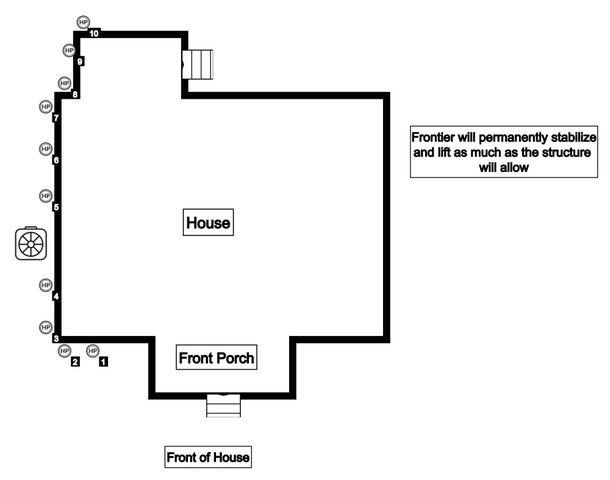
When foundation work has already been completed, the next buyer will want more than a verbal explanation. Documentation establishes what was found, what was installed, and what protection remains with the home.
Sellers should retain:
- The original repair contract and scope of work
- A diagram showing the location of installed products
- Inspection findings and repair recommendations
- Before-and-after photographs, when available
- Warranty terms and transfer requirements
- Service or maintenance records
- Contact information for the company that completed the work
If the contract contains personal information or pricing the seller does not want to share, those sections may be redacted while preserving the technical details and warranty terms.
Some foundation repair systems also include benchmarks that allow the contractor to take future measurements and compare them with the home's condition at the time of repair. Documentation showing the location of those benchmarks can make future service and monitoring more efficient.
“Showing the products that were in there, the warranties that come with them, and the picture of where those products are is really, really helpful,” Gebers said. That information also gives the new owner a clear point of contact if questions arise later.
How sellers can present a completed repair
A completed foundation repair should be presented accurately and with supporting information. Rather than leaving buyers to discover visible evidence of the work and draw their own conclusions, the seller and listing agent can explain that the condition was evaluated and addressed.
Depending on the listing strategy and local requirements, the agent may reference the repair in the listing remarks, attach appropriate documents, or make a repair packet available during showings. That packet can identify the contractor, scope of work, installed products, and applicable warranty.
Any description of the warranty should match the written terms. Sellers should confirm whether coverage transfers automatically, requires notice, carries a fee, or applies only to specific products or areas of the home.
A documented repair can be a positive part of the property's maintenance history. It shows that the prior owner identified the issue and invested in a defined solution rather than leaving the condition for a future owner to investigate.
Gebers recommends presenting the work as a completed improvement supported by clear records. “Most agents at this point in the game all know it's common for those things to come up,” she said. “They're relieved to know it's already been addressed.”
What buyers should do when an inspection identifies possible movement
A general home inspection may identify conditions consistent with foundation or floor-system movement, but the report may stop short of diagnosing the cause or specifying a repair. When further evaluation is recommended, buyers should arrange it within the deadlines established by the purchase agreement.
A foundation or crawl space specialist should be able to explain:
- Which part of the structure appears to be moving
- Whether the visible symptoms are cosmetic or structural
- Conditions that may be contributing to the movement
- Whether repair or continued monitoring is recommended
- The proposed repair method and installation area
- The expected outcome of the work
- Warranty coverage and future service requirements
Some situations may also require an evaluation by a licensed structural engineer. Buyers should follow the recommendations in the home inspection report and coordinate with their real estate agent, lender, and other qualified professionals as appropriate.
The purpose of the evaluation is not simply to obtain a repair price. It should give the buyer enough information to understand the condition, compare the proposed solution with their plans for the property, and negotiate specific terms if necessary.
Cosmetic cracks versus signs of structural movement
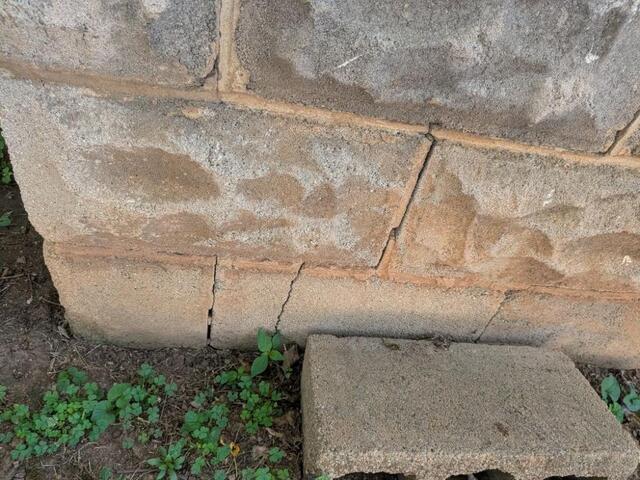
Appearance alone is not always enough to determine whether a crack is cosmetic. A straight drywall crack that follows a seam or tape line may be related to the finish rather than the foundation. Diagonal cracks extending from doors or windows, stair-step cracks in masonry, and cracks accompanied by sticking doors or uneven floors deserve closer evaluation.
The location of the symptoms may also provide useful context. Cracks along exterior walls can be associated with perimeter foundation movement. Changes along interior walls, closets, or hallways may point to movement in the floor system below the home. In a crawl space home, that may involve beams, joists, columns, or the soil supporting them.
These are indicators, not a substitute for an inspection. As Gebers advises, “When in doubt, have it checked.”
Repair options during a real estate transaction
When a foundation issue is confirmed after the home is under contract, the buyer and seller have several possible paths. The available options will depend on the purchase agreement, lender requirements, closing schedule, and the terms negotiated by the parties.
Common approaches include:
- The seller completes the repair before closing.
- The contract specifies the repair company and approved scope of work.
- The parties renegotiate the price or another financial term.
- Payment for approved work is made from the seller's proceeds at closing, when permitted.
- The buyer accepts responsibility for completing the repair after the sale.
A repair agreement should be specific. It should identify the company performing the work, the exact proposal being approved, the party responsible for payment, the completion deadline, and the documents and warranty information that will be provided to the buyer.
If payment at closing is being considered, the parties should confirm the arrangement with the repair company, real estate agents, lender, and closing professional. The work may need to be completed before funds are disbursed, and not every transaction will qualify for the same payment structure.
When an approved repair can be completed before closing and paid from the proceeds, Gebers said it may allow “everybody [to] move forward” with the work finished and the warranty ready to transfer to the buyer. The exact arrangement should be confirmed early with everyone involved in the transaction.
Prepare the property and the paperwork
Foundation issues are easier to manage in a real estate transaction when the parties have clear information. Sellers benefit from identifying concerns before listing and maintaining complete records of prior work. Buyers benefit from treating visible symptoms as a due-diligence question rather than assuming either that the home is failing or that the condition is harmless.
A professional evaluation can define the issue, establish whether repairs are needed, and provide a scope of work that can be incorporated into the transaction. With the property and paperwork in order, buyers and sellers can negotiate based on the actual condition of the home.
Frontier Foundation & Crawl Space Repair provides free inspections for homeowners in Middle Tennessee, Southwestern Kentucky, and Northern Alabama. If you have noticed cracks, uneven floors, sticking doors, or other possible signs of movement, schedule an inspection before your next real estate transaction.
This article provides general educational information. Disclosure requirements, inspection obligations, repair agreements, financing rules, and closing procedures vary by location and transaction. Buyers and sellers should consult their real estate agent, lender, closing professional, and other qualified advisers.