4.9
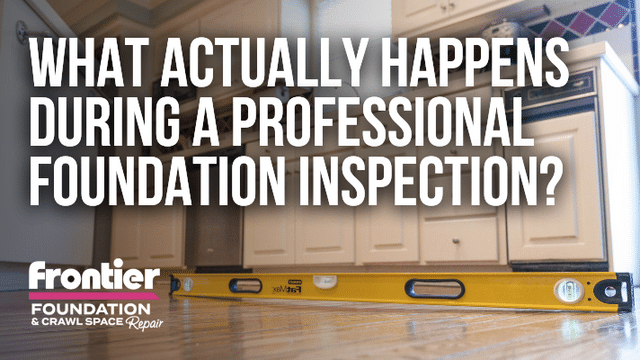
4.9 What Actually Happens During a Professional Foundation Inspection?
TLDR
A professional foundation inspection goes beyond looking at cracks. Your Design Specialist will discuss the changes you've noticed, inspect the inside and outside of your home, use laser measurements to check for settlement, evaluate your crawl space or basement, and identify any drainage or soil issues that could be affecting your foundation. By the end of the inspection, you'll have a clear understanding of your home's condition and any recommended next steps.
Finding cracks in your home can leave you with more questions than answers. Maybe you've noticed a crack in the brick while mowing the lawn, a bedroom door has started to rub against the frame, or one side of the floor doesn't feel as level as it used to.
Those signs don't automatically mean you need foundation repair, but they are worth paying attention to.
A professional foundation inspection is designed to determine whether your home's foundation has moved, what may have caused it, and whether repairs are recommended. That process combines your observations with specialized equipment and a detailed evaluation of the home's structure.
To show you what that looks like, we asked Frontier Foundation & Crawl Space Repair Vice President Dustin Gebers and Design Specialist Chris Hull to walk us through the same inspection process they perform for homeowners throughout Middle Tennessee, North Alabama, and Southwest Kentucky.
The Inspection Starts With a Conversation

Every home has a history, and homeowners usually know when something has changed.
Chris says those first few minutes are important because they help establish a timeline before any measurements are taken.
"We'll ask the customer a handful of questions. If there are visible cracks on the exterior of the home, normally that's the first thing the customer is going to take us to. We'll figure out how long they've been there, if they've spread, and ask if any doors or windows are sticking on that side of the house."
A crack that appeared last month tells a different story than one that's looked the same for ten years. The same goes for windows, doors, or sloping floors. Every detail helps build a better understanding of what the home has experienced.
Looking for Patterns Throughout the Home
After talking with the homeowner, the inspection moves inside.
While one crack may have prompted the appointment, it rarely tells the whole story. Foundation movement often leaves several small clues throughout the house, and looking at them together provides a much clearer picture than looking at any one symptom alone.
Chris walks through each room, paying attention to drywall cracks, sticking doors and windows, uneven floors, and any other signs that different areas of the house may have shifted.
"We'll do a visual inspection on the interior... looking for drywall cracks, looking for doors or windows that are sticking or giving you a hard time. If the floors are starting to slope a certain way..."
Sometimes those observations point toward foundation movement. Sometimes they don't. The goal is to collect enough information before reaching any conclusions.
Measuring the Home With a Laser
Visual observations are only one part of the inspection.
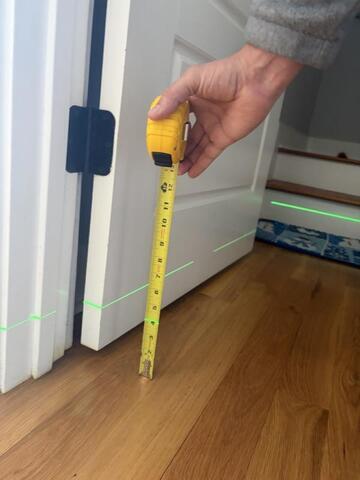
To understand how the home is sitting today, Frontier uses laser equipment to measure floor elevations throughout the house. Those measurements create a benchmark that can identify settlement and help explain why certain symptoms are appearing.
As Dustin explains:
"We're going to be looking at the inside of the house and putting up a laser because we want to use the right tools to make sure that we know exactly what's going on. There's no guesswork."
Chris uses those measurements alongside what he sees during the walkthrough.
"We take a lot of measurements, set up lasers, kind of see the levelness—or unlevelness—of the floors."
Rather than relying on appearances alone, the inspection is backed by measurable data.
The Outside of the Home Tells Part of the Story
Once the interior has been evaluated, the inspection continues around the outside of the house.
Your Design Specialist is looking at more than cracks in brick or concrete. They're also evaluating the conditions around the home that may have contributed to movement over time.
That includes:
- Foundation cracks
- Stair-step cracks in brick
- Grading around the home
- Gutters and downspouts
- Drainage patterns
- Soil conditions
Across Central Tennessee, North Alabama, and Southwest Kentucky, clay soils are one of the biggest factors affecting foundations.
Dustin explains why.
"We have a lot of clay soil here in the South, and it has a tendency to start to shrink. When the soil moves underneath the home, the home's going to move, too."
Long periods of dry weather can cause clay soil to contract. Heavy rainfall allows it to expand again. Over time, those changes can place stress on a home's foundation.
Water management is another important part of the inspection because drainage problems often contribute to settlement.
"We'll check the downspouts to make sure that any water is getting away from the house properly because when we fix the problem, we also want to try and fix the root cause if there is one."
Inspecting the Crawl Space or Basement
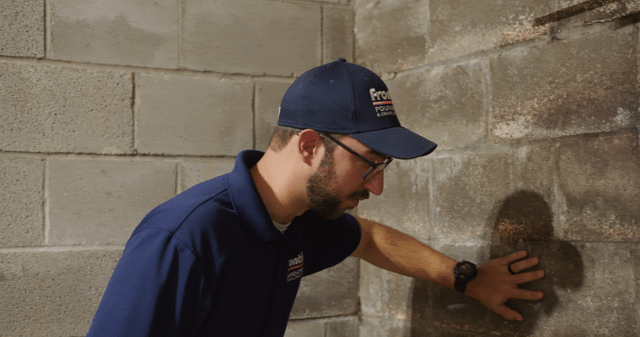
If the home has a crawl space or basement, that's the next stop.
This portion of the inspection focuses on the structural components supporting the house. Moisture levels, wood moisture content, humidity, foundation walls, support beams, and framing are all evaluated.
Chris compares what he finds underneath the home with the symptoms he observed upstairs.
"We'll see if the cracks are visible in the crawl space as well, if they're lining up to what we saw in the brick or on the outside of the house."
Looking at the home from multiple angles helps determine whether everything points to the same underlying issue.
Determining the Right Solution
Once the inspection is complete, the information is reviewed as a whole.
Some homes need repairs. Others may only need monitoring. Occasionally, the issue isn't related to the foundation at all.
Dustin says every recommendation depends on what the inspection reveals.
"Every house is built differently, and every problem is a little different. You've got to have all the tools in the bag to be able to make sure that you can fix it, fix it right, and fix it forever."
Because homes are built differently and experience different conditions, there isn't one repair that's appropriate for every situation. The inspection determines which solution fits the problem.
Why Homeowners Shouldn't Ignore Changes
Many homeowners ask how long they can wait before having their home inspected.
The answer depends on what's causing the movement and how quickly conditions change around the home. Soil moisture, weather patterns, drainage, and the home's construction all play a role.
Chris hears that question often.
"As soon as you start noticing signs, that's when I would advise people to give us a call. Somebody professional can come look at it, shoot the laser, and actually see how much it's dropped."
Dustin shares a similar perspective.
"The house is going to continue to move. It's going to continue to settle. When one section starts to move, it's pulling on the rest of it."
Scheduling an inspection early gives homeowners more information about their home's condition and helps establish a starting point for future comparisons.
What You'll Know Before the Inspection Is Over
By the end of a professional foundation inspection, you should have a clear understanding of what was found, whether foundation movement is present, and what your options are moving forward.
Sometimes that's a repair recommendation. Sometimes it's monitoring the home over time. And sometimes it's simply reassurance that the symptoms aren't related to the foundation.
As Dustin puts it:
"We'll let you know if it's a foundation issue, or it could just be a drywall problem."
A foundation inspection is about understanding your home's condition. With a complete evaluation of the structure, drainage, soil conditions, and any signs of movement, you'll have the information you need to decide what comes next.
Frequently Asked Questions
How long does a professional foundation inspection take?
Most foundation inspections take between 60 and 90 minutes, depending on the size of the home and whether it has a crawl space or basement. During the inspection, your Design Specialist will examine both the interior and exterior of the home, take laser measurements, inspect the foundation, and discuss any concerns you've noticed.
Should I schedule a foundation inspection if I only have one small crack?
A single crack doesn't always indicate a foundation problem, but it's worth having it evaluated if it's new, getting larger, or accompanied by other signs like sticking doors, sloping floors, or cracks in brick. An inspection helps determine whether the crack is cosmetic or part of a larger structural issue.
What should I do before my foundation inspection?
You don't need to do much to prepare. If possible, make sure your crawl space or basement is accessible and move any stored items away from areas you'd like the inspector to examine. It can also be helpful to make note of when you first noticed cracks, sticking doors or windows, or any other changes around your home.
Will I receive repair recommendations after the inspection?
If foundation movement or another structural issue is found, your Design Specialist will explain what was discovered, discuss the available repair options, and answer any questions you have. If no repairs are needed, they'll let you know that as well. The goal of the inspection is to provide an accurate assessment of your home's condition so you can make an informed decision about any next steps.