4.9
4.9 Why Your Crawl Space Feels Damp in the Spring
TLDR
Spring brings blooming flowers and warmer temperatures, but it also brings a common homeowner headache: a damp, musty-smelling crawl space. If you’ve noticed a heavy or "wet" feeling in the air as soon as the weather warms up, you aren't alone.
Understanding why this happens is the first step toward protecting your home’s structural integrity and your family’s indoor air quality.
1. What Is the “Cold Surface” Problem (Condensation)?
The primary reason crawl spaces feel damp in the spring is condensation. During the winter, the ground and the concrete walls of your crawl space become very cold. As spring arrives, the air outside warms up and carries significantly more moisture (humidity).
When that warm, moist spring air enters through crawl space vents, it hits the cold surfaces of the concrete, wooden joists, and metal pipes. Just like a cold soda can "sweat" on a hot summer day, the air reaches its dew point and releases moisture directly onto your home’s structure. This constant condensation creates the perfect breeding ground for mold and wood rot.
2. How Do Rising Spring Water Tables Affect Your Crawl Space?
Spring is often the wettest season of the year. Frequent heavy rains saturate the soil around your foundation. This creates hydrostatic pressure, which is the force of water pushing against your crawl space walls. Because concrete is porous, water can be pushed through the walls in the form of vapor or even seepage through small cracks.
If your home lacks a proper drainage system, this moisture gets trapped under the house, lingering long after the rain has stopped and contributing to that heavy, damp feeling.
3. What Is the Stack Effect and How Does It Impact Your Home?
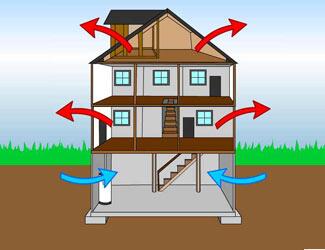
Your home essentially functions like a giant chimney due to a phenomenon known as the "stack effect." As warm air rises and escapes through the attic and upper floors, it creates a vacuum in the lower levels of the house. According to Green Building Advisor, this pressure imbalance pulls air upward from the crawl space or basement and into your primary living areas.
In the spring, when the crawl space is often saturated with moisture from groundwater and condensation, the stack effect carries that dampness and its associated musty odors directly into your home. This process is so significant that experts estimate up to 50% of the air you breathe on the first floor of your home actually originates in the crawl space or basement.
4. Are Open Crawl Space Vents Letting Moisture In?
For decades, the standard building code required crawl space vents to "air out" the space. However, modern building science has proven the opposite: open vents actually worsen dampness. In the spring, these vents act as an open door for humid air. By allowing outside air to circulate freely, you are essentially inviting the humidity to settle under your home.
How Can You Fix a Damp Crawl Space in the Spring?
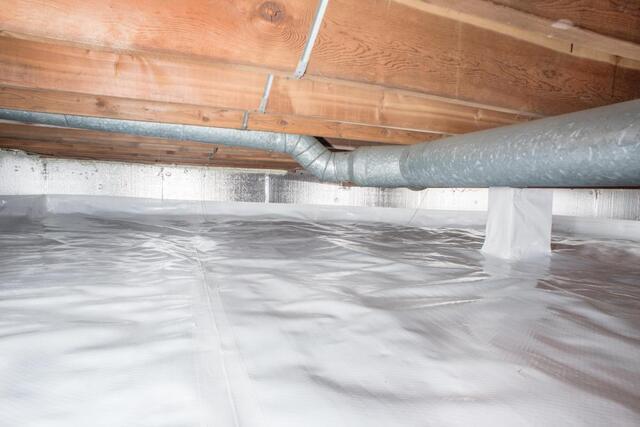
To stop the cycle of dampness, you must control the environment. Frontier Foundations & Crawl Space Repair recommends a three-pronged approach:
- Encapsulation: Seal the crawl space from the earth and outside air using a heavy-duty vapor barrier like CleanSpace. This prevents moisture from the ground and vents from entering.
- Water Management: Install an internal drainage system and a sump pump to collect and remove any groundwater before it can evaporate into the air.
- Dehumidification: Use a high-capacity, professional-grade dehumidifier like the SaniDry Sedona. Unlike a standard store-bought unit, these are designed specifically for the cooler temperatures of a crawl space and can maintain a consistent relative humidity (usually below 55%) to prevent mold growth.
A damp crawl space in the spring is more than just a nuisance; it is a sign that your home's "foundation" is under stress from humidity and water. By addressing the root causes like condensation, groundwater, and the stack effect, you can ensure a healthier, drier home year-round.