4.9
4.9 What Causes Humidity in a Crawl Space?
TLDR
Crawl space humidity is caused by moisture entering from the ground, outside air, and foundation walls.
Warm air cools in the crawl space and raises relative humidity. Moisture also evaporates from the soil and can be pushed through walls by hydrostatic pressure.
As humidity rises, it creates conditions for mold, wood damage, and poor air quality.
The most effective way to control crawl space humidity is to seal the space, manage water intrusion, and control the air with a dehumidifier.
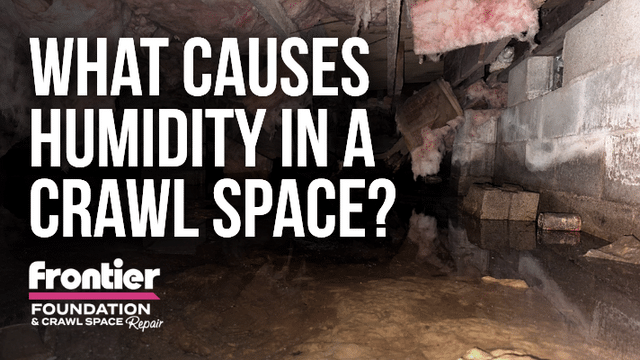
Humidity in your crawl space affects more than just the space itself. It impacts your floors, your air quality, and how your home feels every day.
If something feels off (musty smells, soft spots, or higher energy bills), moisture below your home is often part of the problem.
Key Terms
Relative Humidity (RH):
Relative humidity is the amount of moisture in the air compared to how much moisture the air can hold at a given temperature. When RH rises, the air is closer to saturation, and moisture accumulates on surfaces.
Hydrostatic Pressure:
Pressure created by water in the soil surrounding your foundation. When the ground becomes saturated, this pressure builds and can push water through porous materials like concrete block walls.
How is Humidity Measured in the Crawl Space?
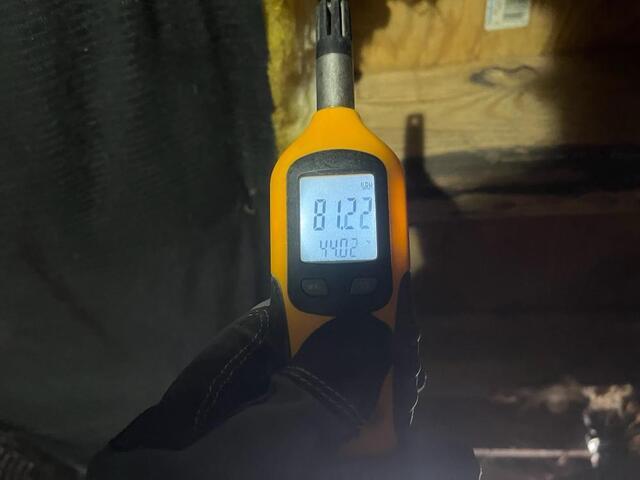
Waterproofing professionals measure humidity using relative humidity (RH). The National Weather Service defines RH as the amount of water vapor in the air relative to what the air can hold.
Warm air holds more moisture than cold air. That relationship is what drives most crawl space moisture issues.
Why do waterproofing professionals use relative humidity?
Relative humidity tells you how the moisture in the air can affect the space.
It helps determine:
- If wood framing will absorb moisture
- If mold can grow
- If pests will be attracted to the environment
The Environmental Protection Agency recommends keeping indoor RH below 60% to reduce the risk of mold, wood rot, and pests.
How Does Outside Air Increase Relative Humidity?
Summer
During the summer, outside air is warm and carries a high amount of moisture. When that air enters the crawl space, it cools down.
As the temperature drops, the air can’t hold the same amount of moisture. Relative humidity rises, and that moisture settles on surfaces like floor joists, insulation, and ductwork.
This is why vented crawl spaces tend to feel damp in warmer months.
Winter
In the winter, the outside air is colder and holds less moisture. When it enters the crawl space, it warms slightly.
The issue shows up when that air meets colder surfaces like pipes and foundation walls. Moisture condenses on those surfaces and collects over time. As more air cycles through the space, more moisture is introduced.
To learn more about how crawl space conditions in the winter, visit: "Why Winter Crawl Space Checks Matter."
Where is Water Coming From?
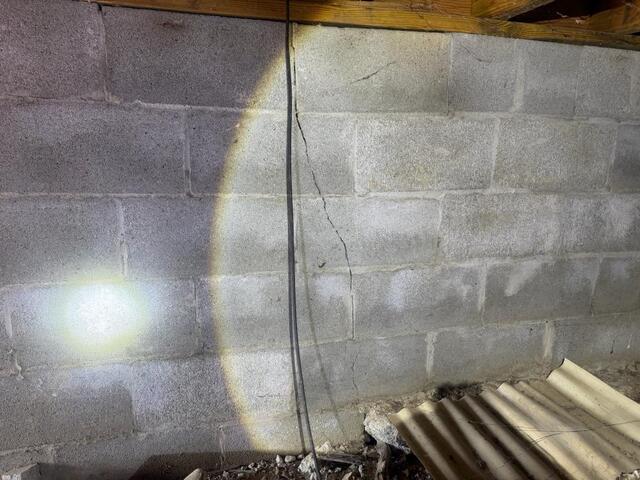
Crawl space humidity usually builds from multiple sources working together.
Ground Moisture
In areas like Tennessee, Alabama, and Kentucky, the soil often holds a high amount of moisture.
That moisture evaporates from the ground and rises into the crawl space air. Without proper sealing, this becomes a constant source of humidity.
Moisture Through Foundation Walls
Foundation walls, especially concrete block, are porous.
When water builds up around the outside of the home, hydrostatic pressure pushes moisture through the walls. This often shows up as efflorescence, a white, chalky residue left behind as water evaporates.
Air Leaks and Openings
Air enters the crawl space through:
- Open vents
- Poorly sealed crawl space doors
- Gaps around pipes and HVAC penetrations
Every opening allows outside air, and the moisture it carries, to enter the space.
How do I Prevent Crawl Space Humidity?
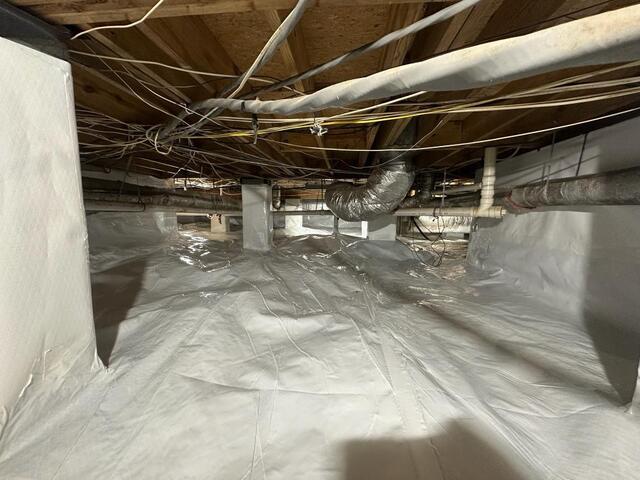
The most effective approach is to address all moisture sources together.
At Frontier, that typically looks like:
- Inspection: Identifying signs of water intrusion, like efflorescence or standing water
- Drainage (if needed): Installing a system and sump pump to manage groundwater
- Air sealing:
- SilverGlo panels to seal vents
- RimJoist insulation to close off air leaks
- An EverLast crawl space door to create a tight seal at the entry point and prevent outside air from entering
- Moisture barrier:
- Drainage matting to allow water movement
- CleanSpace 20 mil liner on floors, walls, and piers
- Humidity control:
- A SaniDry Sedona dehumidifier to keep RH at a controlled level
This turns the crawl space into a controlled environment instead of a source of moisture.
Summary
Crawl space humidity builds from a combination of:
- Moist air entering from outside
- Temperature changes that raise relative humidity
- Moisture evaporating from the ground
- Water moving through foundation walls
- Air leaks that keep the cycle going
Controlling humidity comes down to sealing the space, managing water, and regulating the air.
Dry. Stable. Healthy.
That’s what your crawl space should support.
FAQ
What is a good humidity level for a crawl space?
Below 60% RH, with many systems targeting closer to 50–55%.
Do crawl space vents help with humidity?
In most climates, vents allow humid air into the space and increase moisture levels. Frontier recommends sealing crawl space vents.
Is a vapor barrier enough?
A basic vapor barrier helps with ground moisture, but full encapsulation and dehumidification are needed for consistent control.
Can crawl space humidity affect the rest of the home?
Yes. Air from the crawl space moves into the living space, impacting comfort, air quality, and energy use.