4.9
4.9 What Can Spring Storms Reveal About Your Crawl Space?

Updated: March 2026
Spring storms bring considerable stress to homeowners across Tennessee, Kentucky, and Alabama. The wind can whip up without warning, and the rain can fall sideways, leaving behind scattered branches, saturated lawns, and the uneasy feeling that comes with severe weather season.
While most of the action happens outside, the real impact is often hidden beneath the home. Heavy rainfall can quickly saturate the clay-rich soils common throughout this region. When the ground cannot absorb water fast enough, that excess moisture collects around your foundation and often finds its way into the crawl space.
What looks like a temporary storm above ground can create long-term moisture problems below it.
After heavy rain, checking your crawl space may be one of the most important steps you take to protect your home this spring.
How Spring Storms Put Pressure on Your Foundation
Hydrostatic pressure is the force created by the weight of water pressing against a structure. In the spring, Tennessee, Kentucky, and Alabama often receive between four and six inches of rain each month. Repeated storms can saturate the soil faster than it can drain, especially in areas with dense or compacted clay soil.
When the ground becomes oversaturated, water begins to collect around your foundation rather than move away from it. As moisture builds up, pressure increases against foundation walls and crawl space surfaces.
Over time, that pressure can push water through small cracks, seams, and porous materials, leading to crawl space water intrusion after heavy rain.
Signs of Crawl Space Water After Heavy Rain
If you are wondering how to tell if your crawl space is affected after a storm, look for these warning signs:
- Standing water or muddy soil in the crawl space
- Musty odors inside the home
- Mold or staining on floor joists or insulation
- Bouncy, soft, or uneven floors
- Increased pest activity around vents or baseboards
- Higher indoor humidity levels
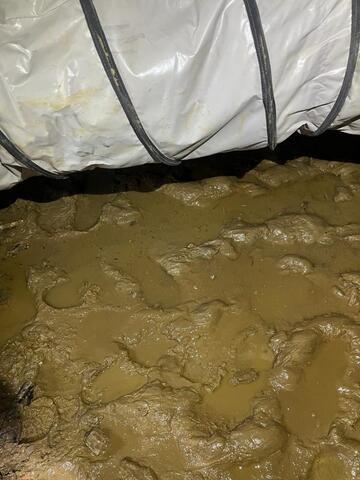
Even minor moisture intrusion can elevate humidity quickly and create conditions that support mold growth and wood deterioration.
How to Check Your Crawl Space After a Storm
Once the wind settles and the rain stops, take a few practical steps to evaluate how your home handled the storm.
- Walk the exterior first.
- Look for pooling water near the foundation, clogged gutters, disconnected downspouts, or soil that has washed away from the home. Downspouts should direct water several feet away from the foundation.
- Check for new cracks or movement.
- Small cracks in masonry or foundation walls can widen under hydrostatic pressure. Stair-step cracking or separation at joints may indicate shifting.
- Inspect the crawl space if it is safe to do so.
- Look for standing water, damp soil, fallen insulation, or condensation on ductwork. Even a thin layer of moisture can indicate crawl space flooding after a storm.
- Monitor indoor air quality.
- A new musty smell, elevated humidity, or soft flooring can signal that moisture is already affecting structural components.
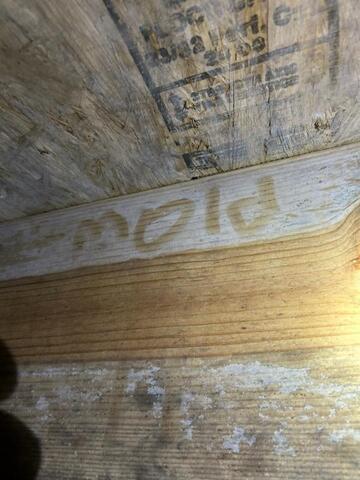
Catching these issues early can prevent minor storm-related moisture from developing into mold growth, wood rot, or structural settlement.
How to Prevent Crawl Space Flooding During Spring Storms
While you cannot control the weather, you can prepare your crawl space to better handle heavy rainfall.
- Improve exterior drainage.
- Keep gutters clear and ensure downspouts extend away from the foundation. Proper grading should slope soil away from the home.
- Seal foundation openings.
- Cracks and penetrations can allow water intrusion under pressure. Professional sealing reduces this risk.
- Encapsulate the crawl space.
- A professionally installed vapor barrier system seals the ground and foundation walls, helping prevent ground moisture from entering the space.
- Install interior drainage and a sump pump if needed.
- Perimeter drainage systems capture groundwater before it rises into the crawl space. In areas prone to repeated heavy rainfall, a sump pump actively removes collected water.
- Control humidity with a crawl space dehumidifier.
- Humidity levels above 60 percent support mold growth and wood deterioration. A dedicated dehumidifier helps maintain balanced moisture levels year-round.
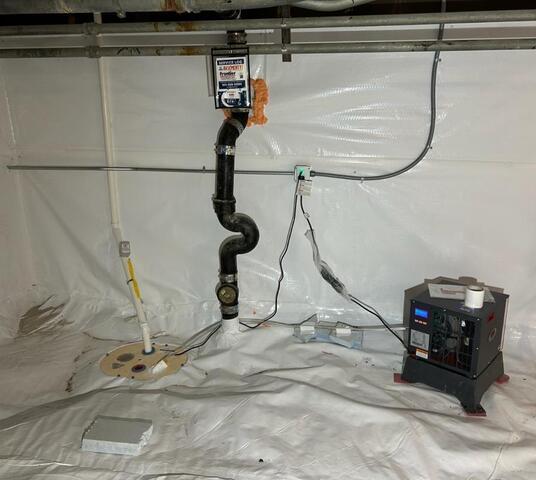
In regions like Tennessee, Kentucky, and Alabama, where spring storms can arrive suddenly and repeatedly, a proactive moisture control system beneath the home provides stability and peace of mind above it.
Protecting Your Crawl Space After Heavy Rain
Spring storms do more than shake trees and soak lawns. They place significant moisture stress on the soil surrounding your home. When that moisture builds up, hydrostatic pressure increases and can force water into vulnerable crawl spaces.
If you have experienced heavy rain and are concerned about crawl space water, flooding, or rising humidity levels, a free inspection from Frontier Foundation and Crawl Space Repair can identify early signs of intrusion and recommend practical next steps.
Addressing moisture concerns quickly helps protect your home’s structure, indoor air quality, and long-term value before small problems turn into costly repairs.
Cite this Page
Frontier Foundation and Crawl Space Repair. “What Can Spring Storms Reveal About Your Crawl Space?” Last updated March 2026.