4.9
4.9 How to Prevent Concrete Spalling During Winter Freeze-Thaw Cycles
Last Updated: February 2026
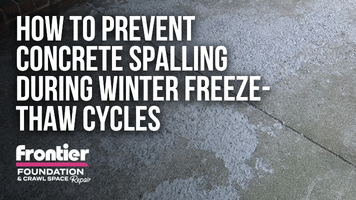
Concrete driveways, patios, and walkways often suffer damage during winter. When water enters the surface and repeatedly freezes and thaws, it gradually breaks down the top layer. This deterioration appears as flaking, pitting, and chipping, called spalling. Understanding why freeze–thaw cycles cause damage and how sealing and leveling work together can help you protect your concrete before problems spread.
Quick Definitions
Spalling
Spalling is the flaking or chipping of concrete caused by trapped water freezing and expanding. It often starts as small pits or rough patches and can expand into larger areas that expose the aggregate beneath. Left untreated, it spreads and weakens the surface each winter.
Freeze–thaw cycle
A freeze–thaw cycle occurs when water freezes below 32°F and later thaws above 32°F. Each cycle causes expansion and contraction inside the concrete, gradually stressing and deteriorating it.
How Freeze–Thaw Cycles Damage Concrete
Concrete is naturally porous. Even well-installed slabs contain tiny capillaries and microcracks that absorb moisture. When temperatures fluctuate around freezing:
- Water from rain, melting snow, or ice seeps into the surface.
- As temperatures drop, the trapped water freezes and expands.
- Expanding ice creates internal pressure and forms microcracks.
- After repeated cycles, the weakened surface begins to flake or chip away.
De-icing salts and standing meltwater make matters worse. Salts draw additional moisture into the slab and accelerate the breakdown of cement paste. Areas where water puddles remain saturated longer, giving freeze–thaw cycles more opportunity to cause damage.
How SealantPro Protects Concrete
Not all sealers provide long-term protection. Many consumer products form thin surface coatings that wear away and require frequent reapplication. SealantPro is designed as a professional, penetrating solution.
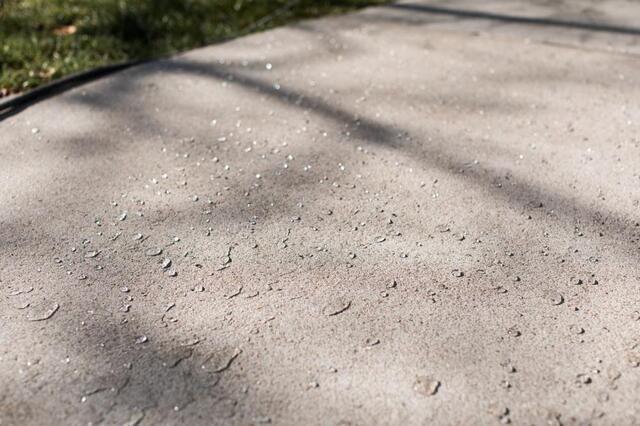
What Makes SealantPro Different
SealantPro can extend concrete life by three to five times. Instead of sitting on top, it penetrates the slab and chemically bonds with the concrete. This process densifies the upper layer and increases resistance to water intrusion.
Key features:
- Penetrates the slab rather than forming a surface film
- Chemically bonds for permanent protection
- Includes a temporary colorant to ensure full coverage during application
Once cured, the color fades while the invisible protective barrier remains. The surface keeps its natural appearance without a glossy coating.
How That Prevents Spalling
By reducing water penetration, SealantPro limits the moisture available to freeze inside the concrete. Less trapped water means less internal expansion and slower microcracking during winter. It also reduces the impact of de-icing salts and contaminants, helping preserve surface strength over time.
How Leveling Protects Concrete
Even the best sealer cannot overcome poor drainage. If a slab has settled and water consistently pools in one area, that section remains saturated and vulnerable. Concrete leveling addresses this underlying issue.
Why Drainage Matters
When slabs tilt or sink, low spots collect water. In winter:
- Pooled water remains on the surface longer
- More moisture seeps into pores and joints
- Freeze–thaw cycles repeatedly attack the same saturated area
This concentrated stress accelerates spalling and cracking.
How Leveling Helps
Concrete leveling raises sunken sections and restores proper slope so water drains away from the structure. When slabs shed water effectively:
- Puddles do not form
- Surfaces dry faster after precipitation
- Less moisture is available to freeze overnight
Leveling manages where the water goes, while sealing limits how much enters the slab. Together, they create a more durable system.
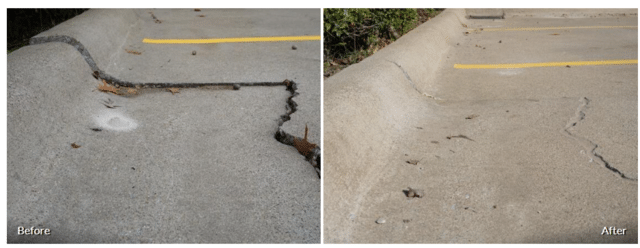
How to Prepare Before Winter
Preventive maintenance in the fall can significantly reduce winter damage. Consider this checklist:
- Inspect for early spalling, cracks, and pooling areas
- Clean the surface thoroughly before sealing
- Seal hairline cracks and joints to limit water entry
- Level sections that hold water or slope toward the house
- Apply SealantPro to create a long-term moisture barrier
- Use concrete-safe de-icers and remove snow promptly
Addressing small issues early can prevent costly repairs later.
Questions to Ask Before Choosing a Solution
When evaluating repair or prevention options, ask:
- Where is the water coming from? Roof runoff, grading, irrigation, or a low spot?
- Is the damage limited to the surface, or are there deeper structural cracks?
- Does the solution address both drainage and sealing?
- Is the sealer penetrating and permanent, or a short-term coating?
These questions help ensure you address the root causes instead of applying temporary fixes.
Homeowner FAQ
- Do mild winters still cause spalling?
Yes. Frequent swings above and below 32°F can create repeated freeze–thaw cycles, even without prolonged deep freezes. - Why does my concrete flake every winter?
Water enters through pores and cracks, freezes, expands, and pries off thin layers. Salts and standing water accelerate the process. - Can SealantPro fix existing spalling?
It does not reattach loose material, but after damaged areas are repaired, it can help prevent further deterioration. - How long does SealantPro last?
SealantPro is designed as a permanent penetrating treatment applied once by a professional. Because it bonds with concrete, it does not require frequent reapplication. - Will sealing make concrete slippery or shiny?
SealantPro dries clear and preserves the natural texture. It is not a thick, glossy coating and typically does not significantly affect traction. - Is leveling always necessary?
Not always. If your slab drains properly, sealing may be sufficient. However, recurring puddles should be corrected before sealing for best results.
Summary
Concrete spalling during winter occurs when moisture inside the slab combines with repeated freeze–thaw cycles. As trapped water freezes and expands, it stresses the surface until thin layers break away. Improving drainage through leveling and applying a penetrating, permanent sealer like SealantPro significantly reduces moisture intrusion, slows surface breakdown, and extends the life of your concrete season after season.
Cite This Page
Suggested citation:
Frontier Foundation and Crawl Space Repair. “How to Prevent Concrete Spalling During Winter Freeze–Thaw Cycles.” Last updated February 2026.