4.9
4.9 Crawl Space Insulation vs. Encapsulation: Which Keeps Heat in Better?
Last updated: February 2026
Crawl space encapsulation retains heat more effectively than fiberglass batt insulation in most homes. Encapsulation blocks cold air movement, reduces ground moisture, and stabilizes crawl space temperatures. This allows insulation and HVAC systems to perform more predictably and reduces heat loss through the floor.
Quick Definitions
- Fiberglass batt insulation (traditional):
Fiberglass material between floor joists in the crawl space or basement. Its primary function is to slow heat transfer through the floor. - Encapsulation (enclosed crawl space):
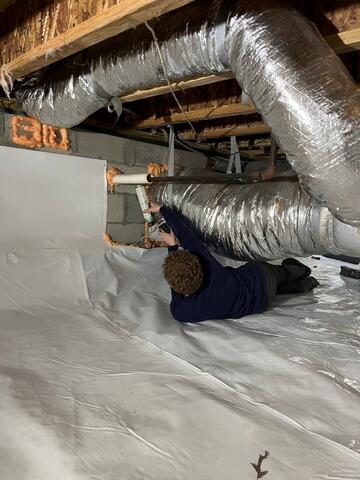
A system that includes closed crawl space vents, sealed air leaks, and a sealed vapor barrier to limit outside air entry and reduce moisture coming from the soil.
Why Fiberglass Batts Often Don’t Feel “Warm”
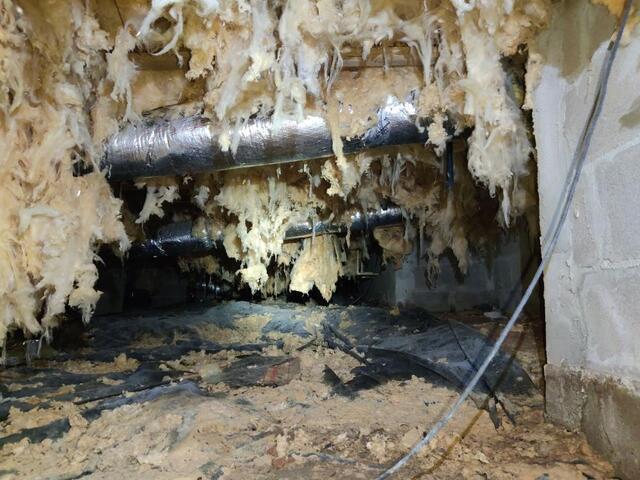
Fiberglass insulation slows heat transfer but does not stop air movement. In vented or leaky crawl spaces, cold outdoor air continues to flow beneath the floor system. This moving air pulls heat away from the floor, causing floors to feel cold even when insulation is present.
Moisture further reduces insulation performance. According to ENERGY STAR, a U.S. energy efficiency program, controlling ground moisture is essential for durability and energy performance. Excess moisture can reduce the effectiveness of insulation and contribute to long-term structural and air quality issues.
Key takeaway: Insulation alone cannot compensate for uncontrolled air movement and moisture.
How Encapsulation Keeps Heat In
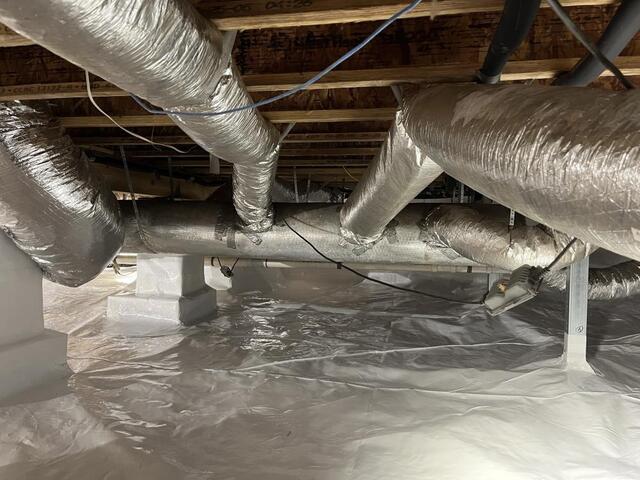
Encapsulation changes the crawl space from an “outdoor-like” environment to an “inside-like” one. When vents are closed and air leaks are sealed, cold winter air no longer circulates freely beneath the home. This keeps temperatures under the floor more stable and reduces heat loss.
A sealed vapor barrier prevents moisture from escaping the soil, leading to drier air that's easier to manage. In many encapsulation designs, insulation moves from the floor system to the perimeter of the crawl space (walls and rim area). This change brings the crawl space inside the home’s thermal boundary.
Result: A more stable crawl space that supports warmer floors and consistent energy performance.
Why Fiberglass Is Often Removed During Encapsulation
In an enclosed crawl space approach, removing old fiberglass batts is common because the strategy changes. Instead of insulating the floor above a cold, vented space, the goal becomes sealing and conditioning the crawl space itself.
Important note: A vapor barrier alone is not insulation. A complete encapsulation plan clearly specifies where insulation will remain or be added, typically along the crawl space walls or rim area.
What to Ask Before You Choose a Solution
- Are crawl space vents and air leaks fully sealed, or is only a ground liner being installed?
- Where will insulation be located after the work is complete: floor, walls/rim, or both?
- How will moisture be controlled long-term?
- Are there combustion appliances in or near the crawl space, and are combustion safety and indoor air quality being addressed?
Homeowner FAQ
Does encapsulation eliminate the need for insulation?
No. Encapsulation controls air movement and moisture, while insulation provides thermal resistance. The best results come from a coordinated plan that includes both.
Will encapsulation make my floors warmer?
Often yes. By stabilizing the crawl space and reducing drafts, encapsulation reduces heat loss from the floor system, which can improve comfort.
Summary
Encapsulation addresses the root causes of heat loss in crawl spaces by controlling air movement and moisture. When paired with a clear insulation strategy, it provides more consistent thermal performance than floor insulation alone.
Floors feel cold? Frontier Foundation and Crawl Space Repair will conduct a free, no-obligation inspection and provide solutions tailored to you and your home.
Cite This Page
Suggested citation:
Frontier Foundation and Crawl Space Repair. “Crawl Space Insulation vs. Encapsulation: Which Keeps Heat In Better?” Last updated February 2026.