4.9
4.9 How Crawl Space Air Impacts the Temperature of Your Whole Home
TL:DR
Is Your Crawl Space Hijacking Your Thermostat?
You’ve cranked the heat, the furnace is humming, and you’re wearing your thickest wool socks, yet your feet are still freezing, and your energy bill is skyrocketing. If this sounds familiar, the problem isn’t your HVAC system. It’s the dark, forgotten space beneath your floorboards.
What happens under your home rarely stays there. If you ignore moisture and cold temperatures in the crawl space, those issues will eventually permeate the rooms above.
The Science of the "Stack Effect"
To understand why a cold crawl space makes for a cold living room, you have to understand the Stack Effect.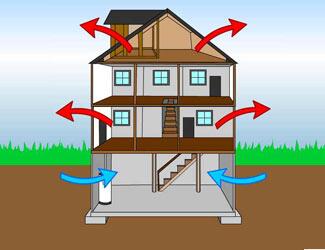
Think of your home like a giant chimney. Warm air is naturally lighter than cold air, so it rises and eventually escapes through your attic and upper-level windows. As that warm air exits, it creates a vacuum in the lower levels of your home. To fill that vacuum, air is sucked upward from the very bottom, the crawl space.
The 50% Rule: Up to 50% of the air you breathe on the first floor of your home comes directly from your crawl space. If your crawl space is vented or uninsulated, you are essentially sucking outdoor air directly into your living room.
Winter Issues: Cold Floors and Overworked Heating Systems
In the winter, the stack effect is at its peak. Icy air enters through crawl space vents and settles under your floorboards. This leads to several frustrating problems:
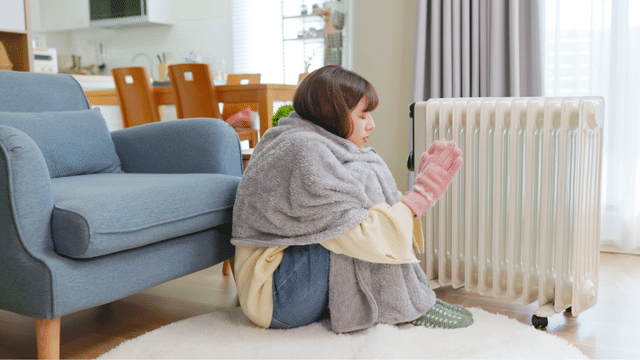
Frigid Floors: No matter how high you turn up the heat, your floors remain cold to the touch because they are resting on a pocket of sub-freezing air.
The Heating Treadmill: Your thermostat senses the cold air rising from the floor and tells your heater to keep running. You’re essentially paying to heat the air that’s constantly escaping out of your roof.
Drafty Rooms: That "ghostly" breeze you feel across your ankles? That’s likely crawl space air being pulled up through gaps in your flooring and around utility pipes.
Summer Struggles: The Humidity Factor
The impact doesn't stop when the snow melts. In the summer, the stack effect continues, but now it’s bringing in hot, humid air.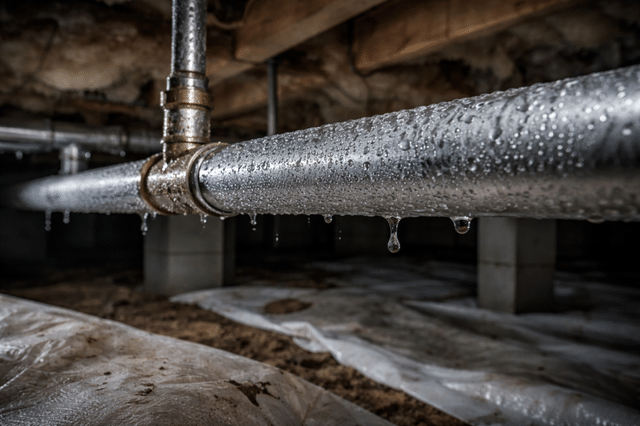
When warm, moist air enters a cool crawl space, it condenses on your floor joists and insulation. This doesn't just lead to mold; it makes your home feel "sticky." Since humid air holds more heat than dry air, your air conditioner has to work twice as hard to dehumidify the space before it can actually begin to lower the temperature.
Reclaiming Your Comfort: The Frontier Solution
So, how do you stop the ground from stealing your heat? The goal is to separate your home from the earth and the outdoor elements.
Seal the Vents: Stop the "chimney" from drawing in outside air by sealing off crawl space vents.
SilverGlo™ Insulation: Unlike fiberglass batts that fall and soak up moisture, SilverGlo™ rigid foam insulation is infused with graphite to reflect heat into your home. It creates a permanent thermal break.
CleanSpace Encapsulation: When it comes to your crawl space, your best course of action is to encapsulate it before you run into issues like cold floors, pest infestations, and more. Luckily, Frontier Foundation & Crawl Space Repair is more than equipped to help you prevent these issues.
Your crawl space shouldn't be a gateway for outdoor weather. By addressing the temperature at the foundation, you're not only saving money on your utility bills, but you're also making your home comfortable from the ground up. Click here for your Free Estimate!