 4.9
4.9 How to Conduct Effective Radon Testing
TL:DR
Radon is an invisible, radioactive gas that can build up inside homes and increase the risk of lung cancer. The EPA recommends testing all homes and taking action if levels are above 4.0 pCi/L. Testing starts with a short-term test (48–72 hours), with follow-up testing optional before mitigation. A certified lab analyzes results and clearly show whether levels are elevated. If radon levels are high, a mitigation system uses piping, a fan, and encapsulation to safely redirect radon out of the home and maintain a healthy indoor radon level.
Why Should I Test for Radon?
Radon, a radioactive, odorless, and invisible gas, is produced by the decay of uranium. While radon is present outdoors, the risk of lung cancer increases when it travels up through the ground into your home and becomes trapped, leading to a dangerous concentration. High radon levels are attributed to 21,000 lung cancer deaths per year, a death rate higher than drunk driving.
The Environmental Protection Agency (EPA) recommends mitigating radon levels in all homes with levels over 4.0 pCi/L (radiation damage similar to 200 chest X-rays a year or 8 cigarettes a day). According to the EPA, 1 out of 15 homes in the United States has high radon levels. Below are maps showing the potential for high radon levels in Alabama, Tennessee, and Kentucky.
View EPA Radon Map for Alabama
View EPA Radon Map for Tennessee
View EPA Radon Map for Kentucky
Which Test Do I Use?
The first step in testing for radon is a short-term test, often 48 to 72 hours. If your first short-term test shows results above 4.0 pCi/L, you can take a follow-up test, although you do not need to do any follow-up testing in order to install a radon mitigation system.
A short-term follow-up test is best if your first test was above 8.0 pCi/L, allowing mitigation to begin with greater confidence. If you want to know how radon levels change throughout the year before mitigating, a long-term follow-up test is recommended.
Whichever test you decide to conduct, it will be most effective if sent to a certified lab. Frontier Foundation and Crawl Space Repair offers radon test kits through AccuStar Labs. AccuStar is accredited through the National Environmental Laboratory Accreditation Program, the National Radon Proficiency Program, and the National Radon Safety Board.
How Do I Use the Test?
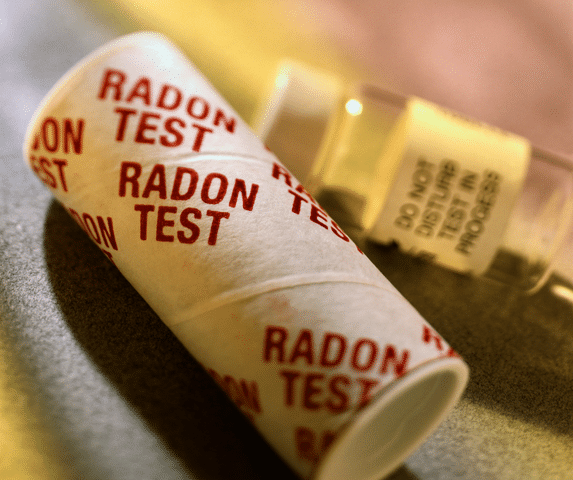
Radon testing measures the picocuries per liter (pCi/L) found in the air of your home. For a valid test result, the test must be performed under Closed House Conditions for 12 hours before testing and during the exposure period.
The test should be performed in the lowest area of the home that could be used regularly, such as a bedroom, play area, or workshop. The test device should be left in place for at least 48 hours. The test can be mailed to you or provided during a service appointment. If it is offered during a service appointment, the service technician can help you set it up.
After the 72-hour testing period is complete, you reseal the test and send it back immediately to the lab. The lab will provide results one to two weeks after it is received.
How to Read the Test Results
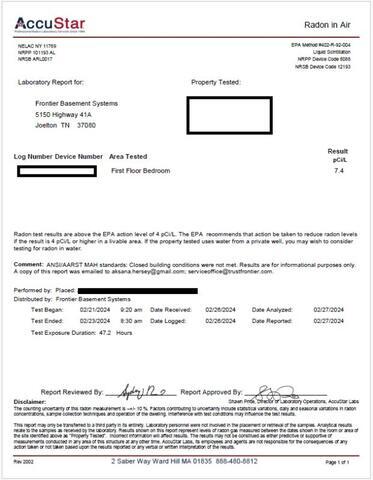
The test results will indicate who the report is for and the address tested. AccuStar Labs reports the space in which the test was conducted and the resulting pCi/L for that space. The report records when you began and finished the process and how long the exposure lasted. Under the pCi/L result, the document clearly states whether your home levels are above the recommended threshold of 4.0 pCi/L.
How Does Frontier Install a Radon Mitigation System
Once the tests are completed and an elevated level of radon is detected, homeowners should contact Frontier Foundation and Crawl Space Repair to install a radon mitigation system.
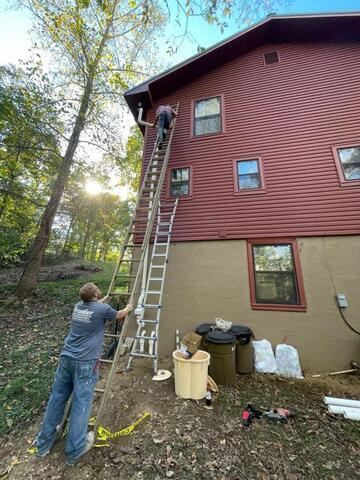
A typical system consists of a large-diameter plastic pipe that connects the air beneath your home to the outdoors. An in-line fan draws radon-rich air out and expels it safely to the exterior. The system is made more effective with encapsulation, which keeps radon gas from rising from the ground into your crawl space and home.
Together, these methods prevent the buildup of radon and keep your home at a healthy radon level.
For free radon tests in Tennessee, visit:
https://tdec.tn.gov/radon_online/frmRADON_Online.aspx


